2nd Brain Collective Podcast: Ryan Wert of the REO Town Commercial Association


Videos do have a shelf life. You may be able to extend it every so often, but just have it in the back of your head that this video, may not be valid in two years.
Why? Personnel changes, location changes, website changes, service additions or subtractions, you name it. A lot can change in two years. And if you’re a non-profit, you know that turnover is an occupational hazard faced year after year.
 However, for us, we can use the videos as promotional tools for quite awhile, until it really starts to look dated. Unless the unthinkable happens and we have to pull the video from any online accounts we have it as a part of.
This happened just the other day. I was at an event as an exhibitor, and when I do events in this capacity I tend to make a YouTube playlist for that specific audience to loop on a monitor. However, at the top of the list, was a video I was very proud of. But, included in a third of a video was a key interview who two days before was just indicted of some serious crimes in a very high profile, media heavy way.
Luckily I caught it before I rolled it out. I don’t want to be associated with that person or have them as part of any promotional tool for my company. It is unfortunate, because it’s a very good video and his interview really added the emphasis we needed for the story.
What is fortunate is that this situation happens very rarely. In fact in the last 15 years, we only had to pull one other video for the same reasons. But you should act quickly to distance any video that has a negative cloud over it and archive it and hope that you have more videos in your library that can fill that void.
 Having a return on investment is very important. It’s good to know what the result is when you invest a certain part of your budget into something, you want to make it back, plus. I understand that and when I talk with a client I talk about how video will work for them and what’s the best way to use it that will have the most impact.
But while talking with a new client one day, the return on investment conversation was flipped a bit. We talked about how the actual return on investment doesn’t come from their budget, but actually their customer.
What I mean is, the customer invests in you as a business, in turn you create more products/or services and have more authority in your space to educate and engage with your community. Which your customer is already a part of.
So, where is the real return on investment when it comes to marketing? Is it within your budget? Or is it your customer investing in you to provide more material?
I know it’s a chicken and the egg conversation. But a good one when defining who is looking for the real return on investment.
As a video producer, I want everyone to use video for their organization. However, having video and using video are two different things. You just can’t have video for video’s sake. You really need to make sure that you are using it to meet your goals. That is why I want you to think about the three C’s when developing your plan on using video.
 Content: The adage right now is content is king. You do need something to put out there alongside your written blog posts, your photos and infographics. You need all of this content to push your message. Having video being part of a content marketing package helps visualize your organization in a different way and can be used to add that explanation point to the message you have been sending.
Context: I heard somewhere that if content is king, then context is queen. I really like that. You have to understand why you are using video and how to use it in your marketing and branding. Thinking about context allows you to fully describe the who and the why of your business and to develop a package that speaks to your audience.
Community: Speaking of audience, are they picking up what you are laying down? This is the group you need to be targeting so they can share and like and talk about what you have going on in your videos. Without a strong community, your videos may fall on deaf ears. But with a consistent content strategy you have the ability to build that audience and then sustain them.
So there you have it, think about these three things when adding video to the mix. If you already have content going, video will just enhance it, but only in the right context. Remember this. Video just for video sake is not going to work, because there is no strategy behind it. Your videos have to be purposeful, timely and engaging. That’s also how you build your community.
Now in this instance, I’m not talking about the band.
I am talking about being strategic when you develop the video that the right people are a part of it. In fact, I’m a big proponent of not using a narrator. Why? I feel that when creating a short piece that a narrator detracts from the engagement you are trying to achieve with your audience. I feel that the narrator talks at instead of to the audience and therefore an emotional connection is lost.
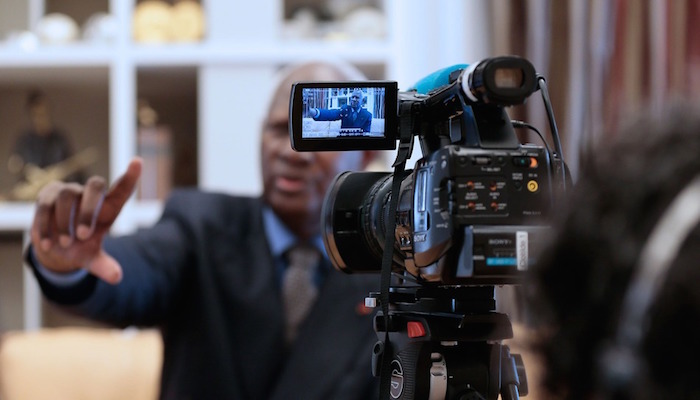 So who should you put in the video? Who should talk? Well, real people. If you own a business, it should be you who talks about what your business is about and then add in your customers, and even staff who are standouts. For a non-profit, think about the same things, but focus on your services and who you serve. Each success you have is a story in and of itself and would make good videos. You are looking for donors, are you not?
When you use people that play a part in your organization, there’s a connection there between you and your audience, that can transcend into the physical world. But you have to be skillful with questions and prepared with what is needed to be said, these people will not be professional on camera talent for the most part. However, the connection they can make with the audience and the trust they will help build for your company is invaluable.
Just recently, I was talking with a client who wanted to focus a video on one of the software packages they use, he really wanted to get into the visuals of the piece. But during the process of the walkthrough, the person that demonstrated the product, did a wonderful job doing that. But, what stood out was his explanation of why this product works so well for hiim and the company. I thought why not just use him as the subject to introduce, demonstrate and resolve why this product works so well. That way, you have a real person talking about the product while using it and not just another product demonstration.
That is what we will be going with. Now don’t get me wrong there will be instances in which narration is necessary. I just like the first option of using real people to talk to your audience. Your audience will like it as well.
