
#BetterCallPaul – #GivingTuesday with the Giving Jar
When It Comes to Video, Think of the Who.
Now in this instance, I’m not talking about the band.
I am talking about being strategic when you develop the video that the right people are a part of it. In fact, I’m a big proponent of not using a narrator. Why? I feel that when creating a short piece that a narrator detracts from the engagement you are trying to achieve with your audience. I feel that the narrator talks at instead of to the audience and therefore an emotional connection is lost.
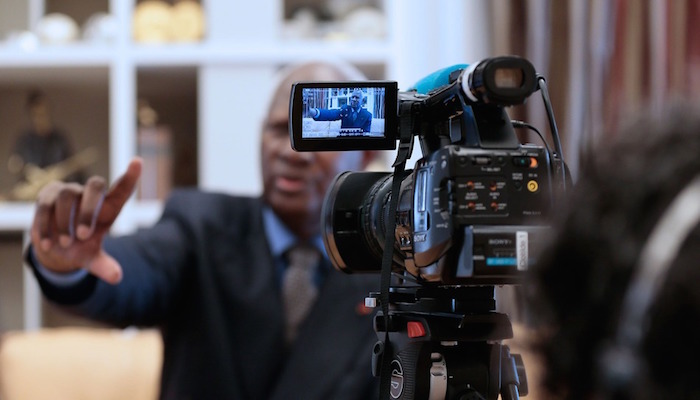 So who should you put in the video? Who should talk? Well, real people. If you own a business, it should be you who talks about what your business is about and then add in your customers, and even staff who are standouts. For a non-profit, think about the same things, but focus on your services and who you serve. Each success you have is a story in and of itself and would make good videos. You are looking for donors, are you not?
When you use people that play a part in your organization, there’s a connection there between you and your audience, that can transcend into the physical world. But you have to be skillful with questions and prepared with what is needed to be said, these people will not be professional on camera talent for the most part. However, the connection they can make with the audience and the trust they will help build for your company is invaluable.
Just recently, I was talking with a client who wanted to focus a video on one of the software packages they use, he really wanted to get into the visuals of the piece. But during the process of the walkthrough, the person that demonstrated the product, did a wonderful job doing that. But, what stood out was his explanation of why this product works so well for hiim and the company. I thought why not just use him as the subject to introduce, demonstrate and resolve why this product works so well. That way, you have a real person talking about the product while using it and not just another product demonstration.
That is what we will be going with. Now don’t get me wrong there will be instances in which narration is necessary. I just like the first option of using real people to talk to your audience. Your audience will like it as well.
#BetterCallPaul – October 2016 in Review
Guest Post: SoupGrant Lansing: Eat Soup, Do Good


 Erik Gillespie is a software developer and semi-pro advocate of amazing things. He founded Giving Jar, a blog and upcoming donation platform for Lansing charities, and helps people learn how to create websites and other software at Lansing Code Lab. He’s kind of obsessed with board games, too.
#BetterCallPaul – Talking with Julie Holton of Fraser Trebilcock
5 Other Platforms Where You Can Host Your Video
I know I talk a lot about YouTube. There are two reasons for that. 1. YouTube is the second most used search engine in the world. 2. It’s free.
At this point, I’m still educating my clients on using video in their current marketing, budgets are key and they know YouTube. However, for those who are looking to expand more into heavier video marketing, then spending money on seeing better results may be what you need. In that case, it would be time to look at other platforms that not only host your video, but help with analytics and return on investment as well. YouTube offers these as well, but with YouTube, to get the best out of the analytics there, you really have to fill out the information to get the best out of it.
 Here are five other options for you if you are looking for more robust ways to use Video in your marketing. Remember, these have costs attached to them, but they offer free trials or upgrades to take advantage of everything they do.
1. Vimeo. You’ve probably heard about this one. This platform has really been billed for cinematographers. It offers a higher quality and is free up to 500 mb per week. After that you have to pay. It also offers the same kind of analytics as YouTube, however, it does not yet have the traction.
2. Wistia. This is the name brand for video marketing with integrations into several marketing platforms like Marketo and HubSpot. They are huge into analytics and integrate into your email platform very well to collect new customers.
3. Sprout Video. This platform not only allows you to analyze your results. It also can develop a website based platform that is completely video-centric. So if you are really looking at go all in on video, this is a platform to try.
4. Viddler. This platform works best in the educational or training realm and is a very good platform to do that. It’s organizational and collaboration tools set it apart for this type of visual learning. We have a client that uses this specifically for training purposes and it works very well.
5. Vidyard. This platform is great for in-house collaboration and creativity. It allows your team to create personalized videos, create videos from slide decks and also do live streaming, which these other platforms do not offer.
Now all of these platforms offer embeddable content to go on your website, have very robust analytical tools, integrate with email marketing and are mobile optimized. You will get everything you need out of them if you are ready to take that next step into video marketing. Plus they are served with no ads. That’s the biggest bonus. But that’s what keeps YouTube free.
Any questions?
The Mystery of the Viral Video
Every video producer within the last five years has heard the phrase, “ I need you to make me a viral video!”
Every video producer also knows that that’s when you have to sit the client down for an educational moment. Videos do go viral, but it’s either by pure chance or by having a huge strategy behind it. If you don’t plan for it, or have a kid, cat or dog do something spontaneously, the chances of your video going viral is zero. And like they say in showbiz, don’t ever work with kids or animals. Now you see the irony in this? However, with that being said, I also think the viral aspect of a video is also very relative. What do I mean by that? You have to look at the market you are serving. If your audience is a subscriber base of 8,000 and you get 2,500 views and over a hundred shares organically, I think you can claim that your video went viral. The same goes if you have only 2,000 subscribers and your video got 900 views and 15 shares. it was pretty darn successful!
 What I am saying is you can’t compare your video success rate to what Coca Cola or even the Kardashians do. Not only do they have a large fan base, but they have a huge marketing machine behind them as well. They also have a strategy put in place as well so that their video views do hit the hundred of thousands of views and shares.
So, what do you have to do to make sure you get the best bang for your buck when it comes to video? 1. Have a strategy in place to use it effectively. 2. Upload it to more than one place 3. Embed it to your website 4. Make sure you add keywords 5. Tag the appropriate people/organizations involved with the video.
There’s many more, but essentially it comes down to knowing your audience and being able to tell the right story. Your video will go viral, but only if you have a plan and stick with it. Remember, just because a video of dogs without coordination got 1 million views doesn’t mean your video won’t be successful. It all boils down to the audience.
Here’s an example of one of our videos that went “viral” locally.
Guest Post: Nonprofit Communications: A Few Basic Tips
Organized communications with streamlined and consistent messages are essential for every organization and business in today’s climate. The need to explain to people what you’re doing and why it matters can help you reach those you are seeking to serve, connect with funders and raise awareness to the general public and politicians about the issues. In many cases, nonprofit organizations have additional challenges around capacity and general expertise on the subject. Unfortunately, this usually means that organizations don’t prioritize this task and it isn’t done as well as it could be. In this post, I will outline a few primary priorities that will really help steer your communications in a better direction as you evaluate and develop a strategy for the future.
Getting Started
Chances are, you are already performing this function to some extent within your organization. When you aren’t starting from square one, you have the opportunity to evaluate your current situation and make it better, which can be considerably easier. Start by making a list of all of the different tools that your organization has and uses, along with any existing scheduling, resources and staff accountability associated with it. This includes everything from a logo and tagline, to structured emails that go out to a list, press releases, social media accounts, business cards, marketing materials and more. Once you have this list, look at them and evaluate whether or not they are consistent, represents the values of your organization and follows basic general rules for brand recognition. Again, it’s much easier to discard materials that are obsolete or ineffective and update those that are. It’s also a much better use of your resources, which everybody can appreciate. Further, it is essential that you evaluate your all of your communications and work on an ongoing basis so that you can prove that your efforts are worth it. Using email, website and social media analytics, surveys, and attendance numbers are just a few easy ways to check in on your work. Don’t feel bad if you have to revamp things – learning more about our clients helps us to serve them better.
Brand Recognition
People often misunderstand brands and think they only apply to businesses and cor
porations, but people and organizations have them too, whether they realize it or not. A brand is the articulation of a set of values, goals and p
romises a group represents and hopes to portray to the rest of the world. More than a logo, the consistency of your messages, styles and practices packaged together make a brand that b
ecomes recognizable over time. Moreover, the professionalism in which you exhibit throughout this process, from how you answer the phone to how you describe what your organization does should complement all of the other printed and digital materials. The more you put out with your brand elements on it, the more people will begin to recognize your organization and make associations based on their experiences with you. Consider this when you are going through your materials in your original audit and make sure that they are consistent and representative of your brand.
 Speak to Your Audience
Are you putting out communications that your audience is receiving? Are they in the correct format and pushed out on communication channels where they visit? It is most important not to spread yourself too thin and try to be everywhere all the time, especially if these different tactics are beyond the personnel skillset. When you are making your list of all of the different assets that you currently have (logo, marketing materials, etc.) make a note about where you distribute and publish these items. Then think about the different opportunities for distribution and make sure that is in alignment with where your audience is located.
For example, if you are hosting an event that would appeal to a young professional demographic, you might not be as lucky by posting flyers at the senior center. Think critically about how you might find your audience and utilize your resources to have a presence there. Moreover, using graphics and messaging that resonates with your intended audience is more likely to increase their interest.
Defining a Strategy
Planning your communications and your overall strategy has a lot of moving parts, and involves a variety of skills, resources and buy-in for it to be effective. If you have a full campaign ready to launch but you can’t get the rest of the organization to use it, then it has a higher likelihood of falling flat. The tips described above are really just a start and a way to tighten up what you already have, and I do highly recommend working collaboratively as a team and with a professional to develop a strategy that everybody is proud of and can use to hit the ground running. CEDAM hosted a recent webinar for members and Main Street communities in August that outlines the process of getting started more thoroughly. Listen to the recorded webinar here for more tools to create a better and appropriate strategy for your organization.
Lisa  Assenmacher is the Communications & Training Specialist with the Community Economic Development Association of Michigan (CEDAM) in Lansing. CEDAM is a nonprofit membership organization supporting community-based economic development in Michigan. At CEDAM, Lisa supports both the organization and members through marketing, graphic design, communications and educational resource development. She possesses a Bachelor of Science in Urban & Regional Planning, an Associates in Applied Arts in Graphic Design and an Masters in Business Administration. Learn more about CEDAM and a CEDAM members at cedam.info.