
Mission Control Podcast

MISSION CONTROL: Empowering Women and Building Community With Rebecca Kasen

MISSION CONTROL: Empowering Women and Building Community With Rebecca Kasen

The Mission Control podcast, hosted by Paul Schmidt, offers an unfiltered look at the stories behind impactful nonprofit leadership. In this episode, listeners and readers are given a front-row seat to the journey of Rebecca Kasen, Executive Director of the Women’s Center of Greater Lansing (WCGL). What emerges is a powerful story of purpose-driven leadership, strategic transformation, and fierce commitment to community.

### Meet the Host and Guest

Paul Schmidt, creative video strategist at UnoDeuce Multimedia, has built a podcast that brings nonprofit stories to life. This episode introduces Rebecca Kasen (pronounced “Kay-sen”), a passionate and energetic leader who has revitalized WCGL through strategic vision, empathy, and collaboration. Rebecca’s work embodies the essence of mission-driven leadership, and her insights provide a roadmap for both aspiring and seasoned nonprofit professionals.

### The Mission: Empowerment With Flexibility

The Women’s Center of Greater Lansing has a clear mission: to empower women in the Lansing community, enabling them to achieve their unique potential. Rebecca emphasizes that empowerment is not a one-size-fits-all journey. Whether a woman needs counseling, career coaching, social support, or basic hygiene supplies, WCGL meets her where she is.

The Center’s approach is dynamic. Needs evolve, and so do services. Rebecca and her team keep their eyes and ears open, constantly adjusting programs to reflect the reality on the ground.

### From New Jersey to Lansing: A Pandemic Pivot

Rebecca Kasen didn’t plan on moving to Michigan. But when the pandemic confined her family of four in a small New Jersey apartment, change became necessary. A job opportunity in Lansing sparked their move across the country. Trading traffic noise for midwestern calm, Rebecca stepped into a city that would soon become the launchpad for her next professional chapter.

While adjusting to Lansing wasn’t without its humorous moments—like feeling out of place among MSU faculty parents—Rebecca’s adaptability and sense of humor smoothed the transition.

### A Career Built on Advocacy

Rebecca’s roots are in advocacy. Her early roles with Disability Rights New Jersey and Disability Rights Michigan exposed her to the policy and service sides of nonprofit work. Whether helping individuals secure vital services or advocating for statewide policy change, she always centered people’s lived experiences.

At Community Access Unlimited, she assumed a leadership role in legislative advocacy, advocating for funding and support for direct support professionals. This balance of micro and macro perspectives would later shape her leadership style at WCGL.

### Leading the Women’s Center

Rebecca’s path to WCGL was serendipitous. One bad day at her previous job led to some impulsive job applications. But when WCGL responded, Rebecca saw the potential right away. The Center’s \$167,000 annual budget and two-person staff weren’t daunting—they were an open canvas.

Three years later, Rebecca had nearly tripled the Center’s budget, expanded the staff to nine, and diversified the programming. Her leadership recipe included:

* Strong board support
* Creative autonomy
* A commitment to transparency and staff empowerment

She fosters an environment where staff are encouraged to grow—even if it means eventually pursuing better opportunities elsewhere. That’s the kind of leadership that builds loyalty and sustainability.

### The Programs That Make an Impact

WCGL offers an ever-growing menu of programs tailored to community needs. Among them:

* **Counseling Services**: A hybrid model allows clients with insurance to help subsidize care for those who can’t afford it or can’t safely use insurance.
* **Social Space and Computer Lab**: Drop-in areas foster connection, creativity, and job readiness.
* **Bold Steps Business Lab**: Up to 18 coaching sessions help women launch or grow small businesses.
* **Empower to Save Program**: A partnership with Adventure Credit Union helps women develop savings habits with matched incentives.
* **Hygiene Distribution**: High-need essentials are distributed to over 200 people on every open day.
* **Garden and Canning Workshops**: Teaching practical skills with an emphasis on accessibility.

These programs are supported by a flexible strategy that allows WCGL to pivot quickly. Rebecca knows that agility is a competitive advantage in the nonprofit world.

### Financial Growth and Sustainability

Upon joining WCGL, Rebecca discovered serious revenue gaps—particularly around insurance billing. With her mother’s background in nonprofit finance and her own problem-solving instincts, Rebecca restructured the Center’s funding model. Billing insurance where possible and using those funds to support low-income clients made a substantial difference.

This smart, adaptable approach is how WCGL grew its budget from \$167,000 to nearly \$500,000 in just three years.

### Collaboration Over Competition

In a nonprofit-rich city like Lansing, collaboration is key. Rebecca prioritizes partnerships over turf wars. Her team:

* Co-produces public events and performances
* Hosts workshops with culinary, financial, and wellness partners
* Coordinates referrals with other organizations to avoid duplicating services

Her dream? A cooperative retail incubator to complement existing kitchen incubators, allowing entrepreneurs to get retail experience before launching full businesses.

### The \$20 Million Dream

Rebecca isn’t content to rest on the progress already made. Her long-term vision includes:

* A larger, purpose-built headquarters
* Incubator retail space
* Accessible co-working areas
* An expanded career boutique
* Transitional housing for trafficking survivors and young adults

This dream complex would be a comprehensive women’s empowerment campus, providing comprehensive services to help women rebuild their lives.

### Wellness for the Warrior

Despite her packed schedule, Rebecca makes space for self-care. Whether it’s crafting, yoga, or planning real family vacations, she models healthy boundaries. Her Sunday yoga sessions are sacred, and even in her free time, she’s likely experimenting with a new art project.

### Advice for Aspiring Nonprofit Leaders

Rebecca offers practical advice: Honor the past while stepping boldly into the future. Her transition at WCGL was eased by building relationships with the organization’s founders, learning from them, and setting clear boundaries. She encourages leaders to:

* Seek wisdom from long-time supporters
* Avoid erasing legacy in the name of change
* Know when to make the organization their own

“Don’t throw the baby out with the bathwater,” she says. Evolution and continuity can—and should—coexist.

### Staying Connected

Rebecca remains open to collaboration, new ideas, and conversation. She can be reached via:

* Email: [[email protected]](mailto:[email protected])
* Social: WCGL is active on all major platforms

She’s always seeking partners, donors, and dreamers who want to help bring her vision to life.

### Closing Thoughts

Rebecca Kasen exemplifies what it means to lead with heart and strategy. Her story reminds us that real impact starts with a clear mission, a flexible approach, and a deep respect for community. From New Jersey roots to Michigan leadership, her journey inspires action.

Rebecca’s work proves that change happens when people care enough to build it—and bold enough to lead it.

*To hear Rebecca’s full story, subscribe to the Mission Control Podcast on YouTube, Spotify, or your favorite platform.*

MISSION CONTROL: Gabe Biber on Nonprofit Leadership, Local Food, and the Power of Place

MISSION CONTROL: Gabe Biber on Nonprofit Leadership, Local Food, and the Power of Place

On a recent episode of the *Mission Control* podcast, host Paul Schmidt sat down with Gabe Biber, Executive Director of Fenner Nature Conservancy in Lansing, Michigan. What unfolded was more than a conversation about trails and trees—it was an in-depth journey through nonprofit leadership, food justice, urban farming, and the personal and professional creativity that drives Gabe’s work.

Gabe’s path to Fenner wasn’t a straight line. From working in kitchens and community gardens to leading stream monitoring programs and coordinating food security projects, each step added to a broader understanding of how place, people, and sustainability intersect. His early work at the Greater Lansing Food Bank helped him connect with local communities, including refugee growers bringing rich agricultural traditions to Lansing’s urban soil. Gabe embraced the role of facilitator—someone who makes connections, listens, and helps people share knowledge and resources across cultures.

This work laid the foundation for his leadership philosophy. Later, at Haven House, a local shelter, Gabe assumed new responsibilities, transitioning from volunteer coordination to executive leadership. The transition taught him that nonprofit success isn’t just about operations—it’s about vision, relationship-building, and a commitment to systemic change.

Now at Fenner, Gabe leads a team focused on connecting people with nature right in the heart of Lansing. While many know Fenner for its trails and programs, Gabe is especially excited about its expansion into early childhood education. The Conservancy’s nature-based preschool is thriving, offering immersive outdoor learning experiences that spark curiosity and environmental stewardship in kids. For Gabe, this is about more than education—it’s planting seeds for future community leaders.

Throughout the conversation, one theme kept surfacing: creativity. Whether navigating the tensions of nonprofit collaboration, stepping into new leadership roles, or playing improv jazz after hours, Gabe sees creativity as a core tool. It helps him stay flexible, curious, and resilient in a field that rarely offers easy answers.

His advice for new community gardeners? “There’s no wrong way to do it.” The same could apply to nonprofit work—there’s no one-size-fits-all solution, but there is value in showing up, listening, and growing together.

From systems change to stream stewardship, Gabe Biber’s story is a powerful example of nonprofit leadership grounded in humility, collaboration, and imagination. And as Paul reminded listeners at the close of the episode, it’s everyday changemakers like Gabe who help communities thrive.

You can connect with Gabe or learn more about Fenner at [mynaturecenter.org](https://www.mynaturecenter.org). To hear the whole conversation, check out the *Mission Control* podcast on YouTube or your favorite app.

**Stay curious. Stay grounded. And as always—keep reaching for Mission Control.**

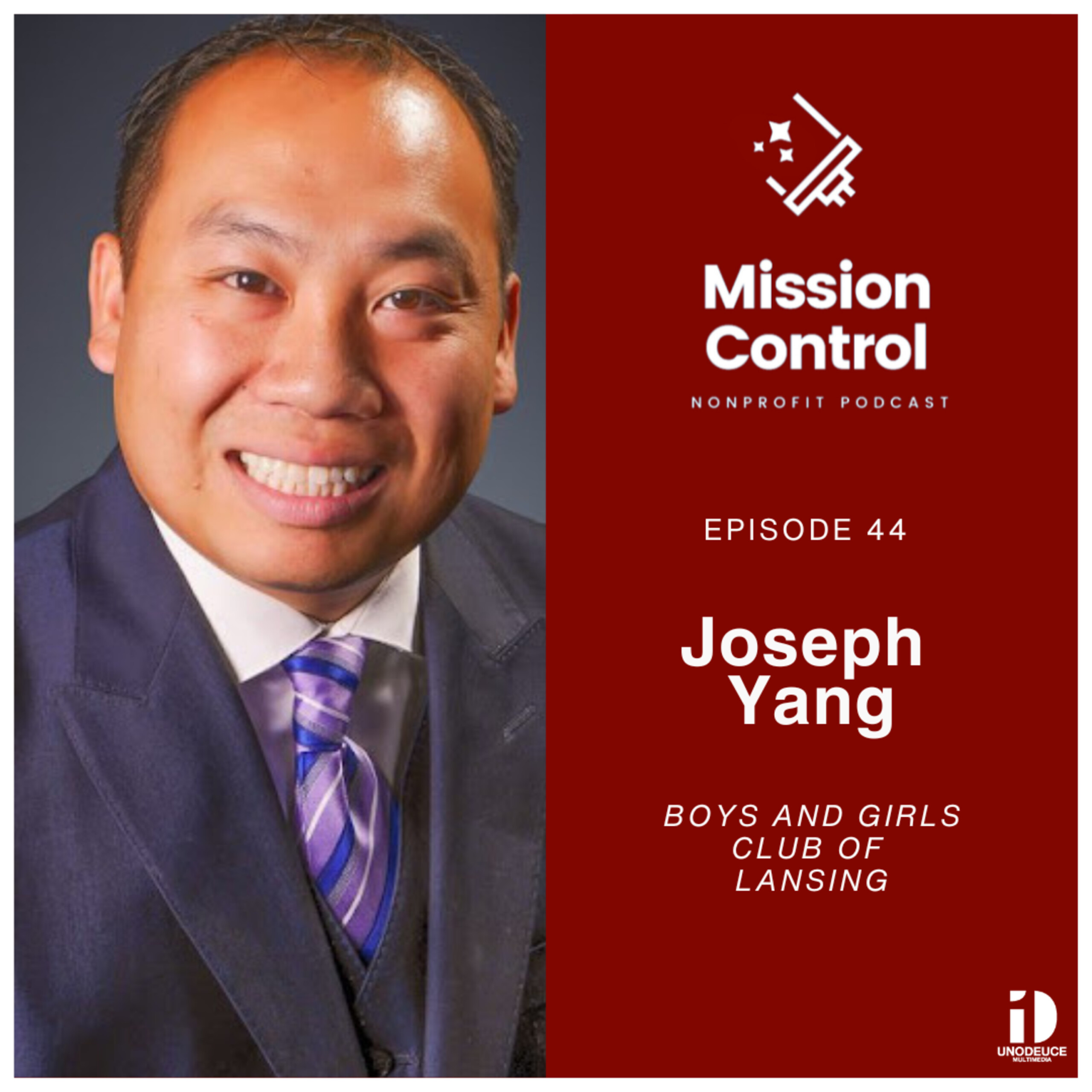
MISSION CONTROL: A Deep Dive with Joseph Yang of Boys & Girls Club of Lansing

MISSION CONTROL: A Deep Dive with Joseph Yang of Boys & Girls Club of Lansing

Joseph Yang’s path to becoming President and CEO of the Boys & Girls Club of Lansing reads like a modern success story—one that weaves together technology, law, and an unwavering commitment to community service. His journey demonstrates how diverse experiences can converge to create decisive leadership in the nonprofit sector.

Yang’s story begins in an unlikely place for a future nonprofit leader: hunched over a computer in the early days of DOS commands and dial-up modems. Growing up in a computer lab, he developed a deep appreciation for technology that would later influence his approach to youth programming. After earning a degree in telecommunications from Michigan State University in 2003, Yang worked in tech support, troubleshooting everything from networking issues to the frustrating dial-up connections that defined the early internet era.

But Yang’s interests extended far beyond circuit boards and code. Inspired by mentors who made a difference in Lansing, he took an unconventional detour into law school, attending Western Michigan University Cooley Law School’s nights-and-weekends program while working full-time. Graduating in 2013, he focused on criminal law, particularly representing indigent clients who couldn’t afford legal representation—a calling that reflected his deep commitment to serving underserved communities.

What makes Yang’s story particularly compelling is his full-circle return to the Boys & Girls Club. He grew up across the street from the organization in a public housing complex called Lareroo, participating in programs as a child before eventually joining the staff as Education Director. This personal connection runs deep—his current office overlooks the very basketball courts where he learned to play as a kid.

“I love the community. I literally come home every day when I go to work,” Yang reflects on his unique perspective as both former member and current leader.

As Director of Operations, Yang wore virtually every hat imaginable—managing finance and HR, driving the van for field trips, organizing sports camps, and ensuring every donated dollar was spent efficiently. His approach was always mission-first, working behind the scenes to help others shine while keeping the organization running smoothly.

When longtime President Carmen announced her retirement, Yang insisted on an open, nationwide search process, prioritizing what was best for the Club over personal ambition. After a thorough evaluation, he emerged as the top candidate—a testament to his dedication and the trust placed in him by the board and community.

Now as President and CEO, Yang is modernizing the Club while honoring its traditions. Understanding that today’s kids are different from those of 20 years ago, he has introduced innovative programs, such as an esports corner with high-spec computers, bridging traditional recreation with digital interests. His tech background proves invaluable as he meets kids where they are, rather than expecting them to adapt to outdated programming models.

The Boys & Girls Club of Lansing serves youth ages 7-17 with after-school programming that includes homework help, arts and crafts, STEM activities, and physical fitness—all for just $10 per year, a membership fee that has remained unchanged for over two decades.

Yang’s leadership philosophy centers on empowering his team and expanding the Club’s reach throughout Lansing, taking services directly to schools and housing complexes. His vision extends beyond the facility’s walls, aiming to serve 185 kids daily while building new partnerships across the community.

Through his unique blend of technical expertise, legal knowledge, and genuine passion for youth development, Yang exemplifies how diverse professional experiences can create exceptional nonprofit leadership.

MISSION CONTROL: Eric Hufnagel: Fighting Homelessness Through Data

MISSION CONTROL: Eric Hufnagel: Fighting Homelessness Through Data

In the complex landscape of homelessness prevention, one Michigan leader is proving that systematic data collection can be a powerful weapon against a persistent social challenge. Eric Hufnagel, Executive Director of the Michigan Coalition Against Homelessness (MCAH), has spent decades working in nonprofit and public service roles. Still, his current position puts him at the center of a statewide effort that’s quietly revolutionizing how communities address homelessness.

MCAH operates as an umbrella organization connecting nearly 600 agencies across all 83 Michigan counties through a comprehensive data system called the Homeless Management Information System (HMIS). Unlike many states that rely on fragmented approaches, Michigan has achieved something remarkable: universal participation in a coordinated data collection effort that provides unprecedented insight into who experiences homelessness and what interventions work.

The numbers reveal sobering realities. While Black residents comprise only 12-13% of Michigan’s general population, they represent approximately 40% of the state’s homeless population—a disparity that has remained stubbornly consistent over time. This data not only highlights problems but also drives policy conversations and funding decisions at both the state and federal levels.

Hufnagel’s background brings a unique perspective to the role. Having worked in mental health services and currently serving as a City Commissioner in St. Johns, Michigan, he understands both the grassroots challenges and the policy mechanisms needed for systemic change. His attraction to MCAH stemmed from recognizing homelessness as the persistent issue that touched every organization he’d worked with, yet no single entity claimed responsibility for solving it comprehensively.

The coalition’s approach goes beyond simply collecting statistics. MCAH trains local agency staff, ensures data quality, and creates “data warehouses” that cross-reference information from different social service sectors. For example, comparing Medicaid usage among homeless individuals helps identify where additional healthcare support might prevent housing instability.

Federal mandates from the Department of Housing and Urban Development (HUD) require agencies receiving federal funding to participate in HMIS systems. Still, Michigan’s implementation stands out for its completeness and sophistication. This comprehensive approach enables MCAH to advocate effectively for policy changes, such as recent legislation prohibiting “source of income discrimination” that prevents landlords from rejecting tenants simply because their rent comes from government vouchers or non-traditional income sources.

However, Hufnagel acknowledges the ongoing challenge of translating data into action. While numbers can make compelling cases for policy changes, elected officials often gravitate toward visible, immediate solutions, such as emergency shelters, rather than addressing root causes through mental health services, job training, or affordable housing development.

The funding landscape reflects this complexity. Most resources originate from federal sources, particularly the U.S. Department of Housing and Urban Development (HUD), while state and local governments play supporting roles within their respective capacity constraints. MCAH’s advocacy work aims to ensure these various funding streams align with what the data shows works.

Despite the demanding nature of nonprofit leadership, Hufnagel maintains perspective through family time and comedy, simple pleasures that prevent burnout in emotionally challenging work. His message to those interested in supporting the cause is straightforward: reach out, get involved, and recognize that ending homelessness requires sustained collaboration rather than individual heroics.

Through methodical data collection and strategic advocacy, MCAH demonstrates that systematic approaches can make measurable progress against seemingly intractable social problems, one policy change and one partnership at a time.

MISSION CONTROL PODCAST: Megyn Forest on Mentorship, Leadership, and Building Community

MISSION CONTROL PODCAST: Megyn Forest on Mentorship, Leadership, and Building Community

The Mission Control podcast returns for Season 5 with an inspiring and insightful conversation between host Paul J. Schmidt, owner and creative video strategist at UnoDeuce Multimedia, and Megyn Forest, Executive Director and CEO of Big Brothers Big Sisters Capital Region. This episode delves into the heart of nonprofit leadership, examining Megyn’s journey, her leadership philosophy, and the transformative power of mentorship.

Megyn Forest began her work with Big Brothers Big Sisters years ago as a volunteer Big Sister in Kalamazoo. Her early experiences helping young people build confidence and connection sparked a lifelong passion for mentorship and community development. These bonds often extend far beyond the formal program, evolving into lasting friendships that span years—something Megyn highlights as a central part of the organization’s mission.

“Big Brothers Big Sisters believes in the inherent potential of every child in our community,” Megyn says. “We help develop that potential by creating mentorships and supporting lifelong friendships.”

Before her role in nonprofit leadership, Megyn worked in injury prevention at Borgess Hospital, where she cultivated a strong background in healthcare administration, community education, and public speaking. Her transition to the nonprofit sector was both intentional and deeply personal, driven by a desire to have a broader impact in her community. She went on to earn a master’s degree in nonprofit leadership from Western Michigan University, equipping her with the skills and perspective needed to lead complex organizations with empathy and strategy.

Throughout the podcast, Megyn shares how her leadership style emphasizes asking the right questions, understanding team dynamics, and fostering inclusive collaboration. These values became even more crucial when she took on her current role at Big Brothers Big Sisters during the COVID-19 pandemic. Navigating this transition involved implementing hybrid work models and maintaining team cohesion through regular weekly check-ins and fostering authentic connections.

Under Megyn’s leadership, Big Brothers Big Sisters Capital Region continues to expand its community presence. One highlight is the annual 5K run, a major fundraising event that not only generates essential support but also fosters community engagement. With over 200 participants last year, the event exemplifies how mission-driven organizations can rally people around a shared purpose.

Megyn also reflects on the concept of “work-life harmony”—a mindset that prioritizes being fully present in both work and home. As a CEO and mother, she embraces the dynamic nature of leadership and personal life, saying, “I joke around, but I think I mean it honestly, that I am a better mom when I’m a better CEO.”

This episode of Mission Control is a compelling look at what it takes to lead with heart, purpose, and a vision for lasting change. Megyn Forest’s journey offers valuable insights for anyone navigating leadership in the nonprofit world or seeking to make a more profound impact in their community.

To hear more from Megyn and other inspiring nonprofit leaders, subscribe to the Mission Control podcast, produced by UnoDeuce Multimedia, on YouTube or your favorite podcast platform. For guest suggestions, contact [[email protected]](mailto:[email protected]).

MISSION CONTROL: Kim Renwick’s Journey with the Shiawassee Community Foundation

In the latest episode of Mission Control, host Paul Schmidt delves into the inspiring journey of Kim Renwick, the Executive Director of the Shiawassee Community Foundation. This podcast showcases the remarkable work of executive directors and nonprofit leaders, and Kim’s story exemplifies the impact one individual can have on their community.

A Mission to Enrich Lives

KIm’s clear and powerful mission drives the Shiawassee Community Foundation: to enrich lives in Shiawassee County through strong community relationships and careful stewardship of funds. Kim emphasizes the foundation’s commitment with the phrase, “For good forever.” This philosophy highlights the organization’s dedication to maintaining endowed funds that honor the names and legacies of families and individuals in the community.

During the discussion, Paul and Kim explore how this mission translates into daily operations and long-term strategies. The foundation builds relationships, fosters community engagement, and ensures that their financial practices reflect their values.

From Banking to Nonprofit: A Seamless Transition

Kim’s journey to nonprofit leadership is anything but conventional. With two decades of banking experience, she felt a strong pull toward the nonprofit sector. Her diverse banking experience, which included marketing, loans, and management roles, equipped her with a robust skill set that proved invaluable in her new role.

Despite the advantages of her background, Kim faced unique challenges upon joining the foundation. Adapting to the foundation’s bookkeeping system initially demanded significant time and effort. However, her financial acumen allowed her to navigate these challenges effectively, leading to innovative solutions that streamlined operations.

Embracing Leadership and Nonprofit Dynamics

Transitioning from a banking officer to an executive director required Kim to cultivate a new leadership style. Her extensive experience on various boards, including the Shiawassee Arts Council and the Red Cross, provided her with a collaborative mindset essential for nonprofit dynamics. Kim’s insights on open communication and effective meeting structures, such as the consent agenda, helped enhance productivity and foster strong relationships with the board.

Weathering the Pandemic Storm

The onset of the COVID-19 pandemic introduced an unexpected whirlwind of challenges just as Kim was settling into her role. With remote work becoming the norm, the foundation had to adapt quickly. Despite the turmoil, Kim and her team showed remarkable resilience. They utilized digital tools like Zoom to maintain connections and ensure the continuation of programs, including the local Giving Tuesday initiative, Raise Up Shiawassee.

The Shift in Fundraising Dynamics

As fundraising efforts shifted during the pandemic, the foundation embraced digital platforms and traditional methods. This dual approach allowed them to connect with younger demographics while still engaging long-time supporters. Additionally, emerging technologies, including AI tools, prompted the foundation to reevaluate tits scholarship application processes, ensuring submission authenticity.

Celebrating 50 Years of Impact

2023 marks a significant milestone for the Shiawassee Community Foundation, celebrating its 50th anniversary. Kim has played a crucial role in organizing events that honor this legacy and recognize the individuals and members who have shaped the foundation over the years. The foundation remains committed to sustainability and growth and focuses on pressing issues such as mental health, childcare, and housing in its strategic plans for the next 50 years.

A Glimpse into Kim’s World

Outside of her professional responsibilities, Kim enjoys various hobbies, including knitting, crocheting, and spending time outdoors with her two-year-old dog. These activities provide a necessary balance, allowing her to unwind and recharge after the demands of her role.

Connect with Shiawassee Community Foundation

For those interested in learning more about the Shiawassee Community Foundation or finding ways to get involved, Kim encourages direct contact at [email protected] or their website at shiacf.org.

Conclusion

Kim Renwick’s journey illustrates the power of dedication and adaptability in nonprofit leadership. Her transition from banking to the nonprofit sector, her proactive approach during a global pandemic, and her efforts to celebrate the foundation’s rich history encapsulate effective leadership’s essence in today’s dynamic environment.

As this season of Mission Control wraps up, listeners can look forward to more enlightening conversations with community leaders in the upcoming season. If there’s a leader you’d like to hear from, feel free to reach out at [email protected].

Thank you for joining us, and we’ll see you in the control center next season!

MISSION CONTROL: Alex Brace: Leading with Compassion at Small Talk Child Advocacy Center

In a recent interview on the Mission Control podcast, Alex Brace, the Executive Director of Small Talk Child Advocacy Center, shared insights into his journey, the organization’s mission, and the challenges of leading a field dedicated to helping children heal from trauma.

A Serendipitous Start

Alex’s path to becoming a leader in child advocacy began unexpectedly during his junior year of high school. Initially reluctant to take an AP Psychology class, he could not switch out due to administrative hurdles. This twist of fate was life-changing when his teacher, M. Hubbard, welcomed him warmly and ignited his passion for psychology.

This experience set Alex on a course that led him through undergraduate and graduate studies in psychology and counseling at Michigan State University. After a brief stint working with adults with severe mental illness in Wisconsin, Alex found his way back to his hometown of Lansing, Michigan, where he joined Small Talk at its inception in 2011.

The Mission of Small Talk

Small Talk’s mission is to provide hope, healing, and justice to children impacted by sexual and physical abuse in Ingham and Eaton counties. The organization offers free healing services, including forensic interviews, counseling, advocacy, and prevention work. Alex emphasizes that while it’s difficult to say it’s “great” work due to the nature of the issues they address, he’s grateful for the organization’s impact on the community.

The Transition to Leadership

In 2015, Alex became the executive director of Small Talk. He admits that the transition from therapist to administrator was challenging, as his training hadn’t prepared him for the managerial aspects of the job. However, he found that his background in therapy provided valuable skills for leading the organization.

Alex describes his leadership style as democratic and collaborative. He values input from his team and believes in the power of collective problem-solving. “I really like the idea of hiring people smarter than me,” he says, emphasizing the importance of bringing diverse perspectives to decision-making processes.

Creating a Positive Work Environment

Despite the heavy nature of their work, Alex strives to maintain a joyful and hopeful atmosphere at Small Talk. He believes finding positivity in their mission is critical, describing Small Talk as “the best part of maybe the worst day of somebody’s life.” This approach helps the team cope with the vicarious and secondary trauma they encounter daily.

The Challenges of Recruitment and Retention

Regarding hiring, Alex and his team are transparent about the problematic nature of the work. They look for candidates who can honestly assess their ability to handle challenging situations and have developed healthy coping mechanisms. Small Talk has implemented a comprehensive onboarding program to ensure new staff members feel supported and have access to supervision when needed.

Work-Life Balance and Self-Care

Alex acknowledges the importance of maintaining a healthy work-life balance for himself and his team. He enjoys spending time with his family, watching movies, writing, exercising, and riding along the river trail. These activities help him unwind and gain perspective on his work.

As a father, Alex finds that his personal life brings added depth to his professional role. It makes him more grateful and intentional about creating a safe environment at home and work. He also sees the importance of modeling a healthy work-life balance for his daughter.

Looking to the Future

Alex views his work at Small Talk as one of the most important things he’ll ever do, second only to being a husband and father. He is committed to ensuring the organization’s longevity and impact, hoping that one day, there will no longer be a need for child advocacy centers.

Until that day comes, Alex and the team at Small Talk continue their vital work, providing essential services to needy children. Their efforts serve as a beacon of hope in the community, offering support and healing to those who need it most.

For those interested in learning more about Small Talk or connecting with Alex, he can be reached at [email protected]. Information about the organization can be found at smalltalkcac.org or on its social media platforms.

MISSION CONTROL: Discover Grit, Glam, and Guts with Cameo King

In the latest episode of Mission Control, a podcast for executive directors and nonprofit leaders, host Paul Schmidt, owner of UnoDeuce Multimedia, welcomes a genuinely inspiring guest, Cameo King, the founder of Grit, Glam, and Guts (GGG). In this engaging conversation, Paul and Cameo dive into her journey from journalism to founding a nonprofit that empowers young girls while shedding light on the mission, growth, and impact of Grit, Glam, and Guts.

Understanding the Mission

As with every episode, Paul begins by exploring the core mission of his guest’s nonprofit. Cameo King explains that GGG is designed to serve teens aged 12 to 17. The program provides educational opportunities and civic learning experiences while fostering self-identity and self-awareness. The goal is to help young girls recognize and harness the power of their voices, preparing them to navigate life’s challenges confidently.

The Name Behind the Mission

Grit, Glam, and Guts—three words perfectly embody young girls’ multifaceted nature. Cameo shares the story behind this name, explaining that it was essential to communicate that there’s more to girls than the stereotypical “cute” or “fluffy” characteristics often associated with them. While sparkles and pink are lovely, girls are strong, bold, and resilient.

Grit stands for the strength they need to persevere.

Glam represents the beauty of their experiences and the compassion they carry.

Guts symbolizes the courage to pursue their dreams and remain authentic to themselves. These elements of grit, glam, and guts define the girls GGG serves and reflect Cameo’s journey.

Reflecting On Her Journey

When Paul asks if the qualities represented in Grit, Glam, and Guts reflect her own life, Cameo emphatically agrees. She describes herself as a multidimensional individual who, much like the girls she serves, embodies strength, warmth, and honesty. Her professional experiences, particularly in journalism, have shaped her into the leader she is today.

From Journalism to Podcasting

Cameo’s background in journalism has significantly influenced her work today. Having studied at Howard University and worked for a CBS affiliate and a radio station in Lansing, Michigan, she developed a passion for storytelling and a deep understanding of people’s experiences. This passion later led her to create the Good Girl Podcast, a platform for women to share confessions and discuss the complex realities of their lives. The podcast challenges conventional ideas about being a”good woman,” offering a space for transformative conversations.

Navigating the World of Communication

Cameo’s expertise in communication extends beyond her podcast. She works with other nonprofits and organizations, helping them craft and communicate their messages effectively. Whether it’s through online platforms or on-camera presentations, Cameo emphasizes the importance of controlling the narrative, staying on task, and managing emotions. Her guidance empowers these organizations to communicate with clarity and integrity.

The Birth of Grit, Glam, and Guts

Cameo’s work with young girls began at One Love Global, a nonprofit focusing on families and youth in urban areas. Initially hesitant about starting a program specifically for girls, Cameo soon realized the immense need for it. This realization sparked the creation of Grit, Glam, and Guts.

Their first initiative was a teen conference that offered a platform for girls to engage in authentic conversations and access resources, particularly during the summer months when many underserved students lacked quality programming. The success of this conference laid the foundation for what GGG would grow into today.

Programs and Initiatives

Grit, Glam, and Guts has since expanded its programs to offer a variety of enriching experiences for teen girls:

Teen Conferences: Held regularly to provide meaningful engagement opportunities.

School-Based Chapters and Curriculums: Implemented in schools like Waverley Middle School and the Boys and Girls Club of Greater Flint, these programs focus on developing self-awareness, identity, and the power of voice.

Summer Residential Camp: Hosted at Michigan State University, this week-long program combines collegiate-level courses with civic engagement activities, offering girls a comprehensive growth experience.

Black Girl Day of Play

One of GGG’s standout events is the Black Girl Day of Play. Originally developed as an alternative to the conference during the pandemic, this event focuses on the joy and wellness of Black women and girls. It’s a day where the often-overlooked need for pleasure is prioritized, providing a safe space for Black girls to experience happiness and well-being. Cameo passionately explains, “Creating a day where you feel safe, where your wellness is the focus, is at the center of Black Girl Day of Play.” The event has since become a crucial part of GGG’s programming, continuing to impact the community profoundly.

Balancing the Weight of the Community

With all her incredible work, Cameo emphasizes the importance of self-care and balance. She makes sure to take at least one day off each week to rest and enjoy time free from work obligations. She dedicates the entire month of July to decompressing and recharging. Focusing on rest allows her to maintain her energy and passion for demanding work.

Conclusion

Cameo King’s journey from journalism to nonprofit leadership is a testament to her dedication to storytelling, communication, and community service. Through Grit, Glam, and Guts, she inspires and empowers young girls to embrace their identities and grow into strong, compassionate, and courageous women.

For more information about Grit, Glam, and Guts, visit their website or follow them on social media. To learn more about Black Girl Day of Play, visit blackgirldayofplay.com.

Thank you for tuning in to this episode of Mission Control. Stay tuned for more inspiring stories from leaders making a difference in their communities. If you have someone you’d like to hear from, email us at [email protected]. Don’t forget to subscribe on YouTube or your favorite podcast platform, and leave us a review! See you next time in the control center.

A Conversation with Brian Philson of Highfields, Inc | Mission Control Podcast

Dive into this episode of Mission Control as Paul Schmidt interviews Brian Philson, President/CEO of Highfields, Inc. He talks about what drew him to his work, his unique longevity in his position, and his value systems, which went from understanding and helping the individual to assisting organizations to understand the individual and their needs.

For more on Highfields, Inc: https://www.highfields.org/

The Mission: To provide opportunities to children, youth and families to become more responsible for their own lives and to strengthen their relationships with others.

If there is someone you know of that you would like to hear about their journey, please email us at [email protected]


Chapters:

Please Subscribe to Mission Control:
YouTube: https://www.youtube.com/c/UnoDeuceMultimedia
Spotify: https://open.spotify.com/show/48rXeAj445PewVH0nyeiis
Apple Podcasts: https://podcasts.apple.com/us/podcast/mission-control/id1541380912

#nonprofitvideo #podcasts #unodeucemultimedia

MISSION CONTROL: Navigating Public Health Leadership: A Conversation with Louise Montag from the Prevention Network

Welcome to another episode of Mission Control, where we spotlight nonprofit leaders who are making meaningful impacts in their communities. In this episode, host Paul Schmidt, owner and creative video strategist for Unroduce Multimedia, sits down with Louise Montag, Director of the Prevention Network. Louise shares her inspiring journey, from aspiring to be an ER physician to becoming a leader in public health, as well as the vital work her organization is doing to prevent substance misuse across the state.

The Mission of Prevention Network

The Prevention Network is a statewide nonprofit dedicated to supporting substance misuse prevention efforts at the grassroots level. As Louise explains, the organization offers comprehensive support, including training, technical assistance, and resources to help build healthier communities. Their mission is to address substance misuse and promote wellness, ensuring that prevention efforts are both effective and sustainable.

A Unique Path to Public Health

Louise’s journey to public health leadership is both unique and inspiring. Initially, she set out to become an ER physician, driven by a desire to help people in crisis. However, her experience working in a hospital during college exposed her to the struggles of individuals dealing with substance use and mental health issues. This experience, coupled with her own battles with mental health, shifted her focus from reactive medicine to proactive prevention, eventually leading her to the Prevention Network.

Recognizing Resilience: The Arthur Ashe Award

In addition to her professional accomplishments, Louise is also a survivor of Larry Nassar’s abuse, and her advocacy efforts were recognized in 2019 when she, along with other survivors, received the Arthur Ashe Award from ESPN. This significant recognition highlights her resilience and dedication to supporting others who have faced similar challenges.

Early Inspirations and Career Shifts

Louise’s initial aspirations were shaped by her environment, particularly her family’s experiences with healthcare. Her early desire to become a doctor was driven by a deep-seated need to help others. However, as her interests evolved, she found a way to blend her passion for teaching with public health, influenced by her mother’s career as a teacher.

Mental Health and Public Health: A Personal Connection

Louise openly discusses her struggles with anxiety and depression, which have informed her understanding of the complex relationship between mental health and physical health. Her personal experiences have been invaluable in her role at the Prevention Network, where she advocates for mental health awareness and support, emphasizing the importance of addressing the psychological and social factors that impact health.

Transitioning to Leadership

Louise’s involvement with the Prevention Network began in an administrative capacity, despite her limited knowledge of substance misuse prevention at the time. However, her dedication to health promotion and support for college students helped her transition into a successful administrative role. Her work as the Michigan Higher Education Network coordinator, particularly the development of the cannabis prevention toolkit, earned her recognition as the Preventionist of the Year in 2019.

Rising to the Challenge: Becoming the Interim Executive Director

In 2020, Louise stepped into the role of interim executive director at Prevention Network, a significant challenge given the organization’s financial struggles and the uncertainty of the pandemic. Despite having only four years of experience, Louise’s proactive approach and commitment to the organization’s mission helped her lead it through a period of strategic planning, board development, and leadership initiatives.

The Importance of Mentorship

Louise credits much of her success to the mentorship and support she received from experienced advisors. This guidance was crucial in her development as a leader, demonstrating the importance of having a strong support network during critical career junctures.

Balancing Work and Well-being

Balancing a high-stress role with personal well-being is essential, and Louise shares her strategies for maintaining this balance. She finds solace in connecting with friends through board games, movies, and dinners, as well as traveling with her partner. These activities help her recharge and stay focused, ensuring that she can continue to lead effectively.

Conclusion

Louise Montag’s journey from aspiring doctor to public health leader is a testament to resilience, adaptability, and the power of passionate leadership. As she continues to lead the Prevention Network, her dedication to creating healthier communities through proactive prevention measures serves as a beacon of hope and strength.

For more information about Louise Montag and the Prevention Network, you can reach out through the following contact details:

– Phone: 517-393-6890 (Ask for Louise)
– Email: [email protected]
– Website: PreventionNetwork.org

Thank you for joining us on this episode of Mission Control. Be sure to subscribe on YouTube or your favorite podcast platform and give us a review. If you know someone whose journey you’d like to hear about, please email us at [email protected]. See you next time in the control center!

Go to Top